


The reason storage prices are surging isn’t a natural disaster disrupting production or shipping issues. It’s AI data centers buying virtually all supply from manufacturers well into the future. The market also impacts the cost of cloud storage platforms.
As a result, the hard drive shortage could last for years and impact the average consumer.
Here’s what caused the sticker shock for hard disk drives (HDDs) and solid-state drives (SSDs). We also offer tips on how to protect yourself on a budget.
How Hard Drive Prices Have Doubled
PCPartPicker has graphs that help visualize the hard drive prices since April 2025.
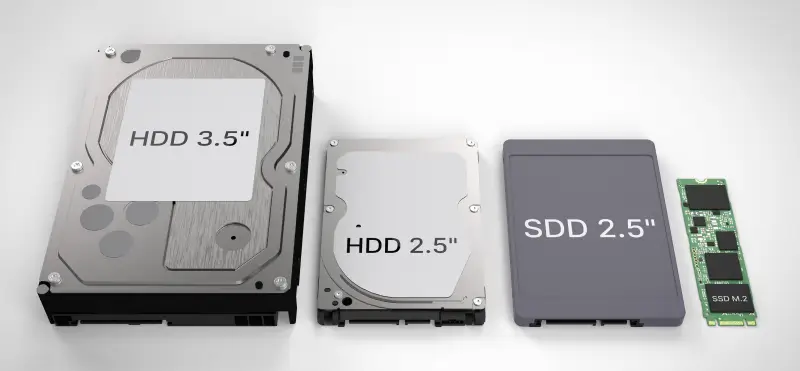
You can see that costs begin to explode across all types of hard drives. The price hikes hit both SATA HDDs and SSDs. M.2 NVMe SSDs weren’t spared either. Many popular hard drive models doubled in price. In some cases, they tripled.
The trend also affects external hard drives and portable devices, adding unique pressure for most consumers.
So, how did these increases happen so quickly?
Why AI Data Centers Caused Costs to Explode
AI consumes and produces massive amounts of data every day. All of that data needs to be stored somewhere.
In most cases, it resides on a disk in a data center.
Companies like Amazon (AWS), Microsoft (Azure), Alphabet (Google Cloud Platform), and Oracle have built out their cloud infrastructure. Data centers have specialized chips, server racks, cooling systems, and network equipment to handle the heaviest workloads. Global corporations, streaming services, and frontier labs, such as OpenAI and Anthropic, rent compute from the hyperscalers.
Providers understand that training and running AI models, maintaining databases, and hosting trillions of files creates an incredible demand for storage space.
In response, they secured a long-term supply of hard drives. Western Digital sold its 2026 capacity to seven customers by February. The company also said that it already had firm purchase orders from customers for 2027 and 2028. In April 2026, Seagate announced its capacity was sold out through 2027.
Long-term agreements between storage companies and hyperscalers trickle down to you.
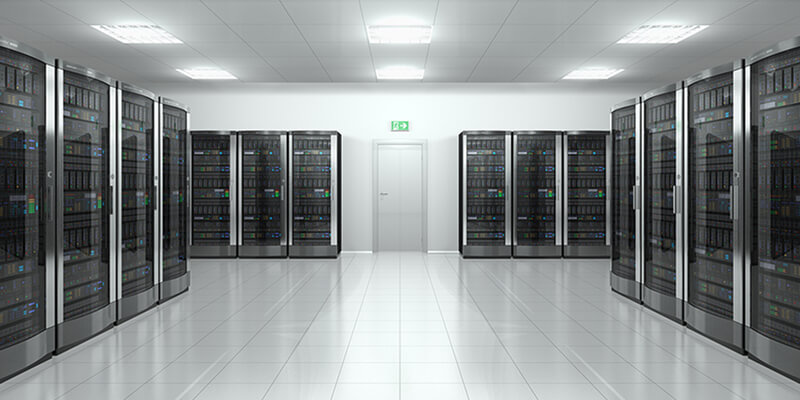
Even though data centers use enterprise hard drives that can operate 24/7, they share production lines and raw materials with consumer disks. Cloud contracts account for almost 90% of Western Digital’s business and over 80% of Seagate’s revenue. Fulfilling multi-year orders worth billions of dollars takes precedence over retail inventory.
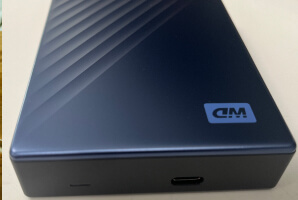
Portable drives in particular have become a victim of the shortage. Models are being delisted to meet the massive demand for nearline hard drives. Pulling products from retailers also narrows your choices when shopping for storage.
Fewer consumer hard drives mean more competition for the remaining supply and higher costs.
Unfortunately, SSDs are not any better.
Why SSDs Won’t Save You Money
In addition to HDDs, AI data centers use high-bandwidth memory (HBM) and ultra-fast SSDs for active training and real-time inference. These tasks require much higher performance than spinning disks can provide.
For that reason, the same supply shock hit the NAND flash market even harder. Tom’s Hardware’s SSD price tracker shows many devices fluctuate wildly. When stock appears at a discount, it quickly disappears.
At the same time, demand for hard drives and SSDs has driven up cloud storage costs. OVHcloud CEO Octave Klaba warned customers that AI-related hardware spending could cause cloud costs to increase by 87%. A similar surge in service prices would make moving data to the cloud less effective.
Where does this squeeze leave consumers?
How Long Will the Hard Drive Shortage Last?
Network World reported that HDD shortages would last through at least the first half of 2027, citing research from advisory firm Gartner.
However, that figure depends on reduced demand from hyperscalers. To this point, they have vacuumed up the supply of storage and network devices to rapidly build AI infrastructure. If demand persists at scale, providers could extend their long-term agreements with Western Digital and Seagate.
Doing so would make the hard drive shortage linger for years.
What the Hard Drive Shortage Means for You
Despite supply constraints, people will still need hard drives to store their data. You may be affected by the hard drive shortage without realizing it.
External storage is popular with many small businesses and home users for local backups. External drives for content creators are widely used to separate workflows, manage large files, and archive projects.
Higher hardware costs could raise product and service prices or delay upgrades. Continuing to use an old or failing device out of fear of replacement raises the risk of data loss. Forgoing a backup drive does the same. Filling up a disk with files because of a capacity premium can shorten its lifespan.
Ideally, consumers should develop and follow a strategy that would survive hardware failure in the next few years.
The 3-2-1 backup rule remains the gold standard of data protection for most people. Neglecting backups due to the shortage could be even more costly.
How To Protect Your Data on a Budget
While portable hard drives are more expensive than ever, they are much cheaper than external SSDs.
An HDD’s cost per gigabyte is still less than half that of an SSD on average. The lower price lets you get more storage for your money. The extra capacity is especially critical if you expect your amount of data to grow in the near future.
Buying the drive you can afford right now is smarter than waiting for a great deal that likely isn’t coming. Even modest savings on today’s inflated prices during Amazon Prime Day, Black Friday, or Cyber Monday can feel disappointing.
The good news is that consumers have some options to satisfy their storage needs.
Here are some tips for managing HDD price hikes:
- Obtain a drive for a second copy of files before adding capacity to a PC.
- Delete duplicate files and junk to reduce the amount of storage space required.
- Use a spare hard drive or SSD inside a USB enclosure to save money on a new device.
- Consider recertified drives from a manufacturer or refurbished drives from a third-party seller, as long as they come with a warranty.
- Beware of fake hard drives sold at online retailers like Amazon and Walmart.
Beyond that, follow the best hard drive maintenance practices to extend your disk’s lifespan past the current shortage.
If you do encounter hard drive failure without a backup, don’t assume the worst. At Secure Data Recovery, we have recovered billions of files across more than 100,000 cases. Our data recovery services also include free diagnostics, no-obligation quotes, and a No Data, No Recovery Fee guarantee. Call 800-388-1266 or request help to speak with an expert.

Timothy Burlee

Timothy Burlee is a content writer for Secure Data Recovery Services. He specializes in various topics in the data industry, including data recovery technology, storage devices, and digital forensics. Throughout his career, he has covered complex concepts and provided accessible solutions for users. Before joining Secure Data, he worked as a freelance technical writer.






.png)
