


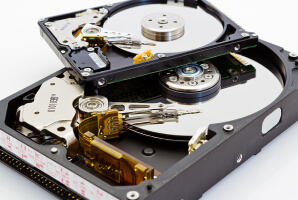
Platter damage is one of the most serious failures a hard disk drive can experience. Platters are the spinning disks inside the drive that physically store your data, so when their surface is scratched or damaged, the magnetic material holding your files can be lost entirely. This typically happens from head crashes, sudden impacts, or contamination inside the drive.
Unlike most hard drive failures, platter damage cannot be repaired in the traditional sense. Even so, a skilled engineer with the right tools can often work around the damage to recover your data.
What To Know:
- Platter damage cannot be repaired, but retrieving lost data is still possible.
- Stop using the hard drive immediately to preserve data on the disk.
- Experts can address the damaged HDD in a state-of-the-art lab.
- You can request help to speak with a professional about platter damage.
How Platter Damage Affects Hard Drive Repair
Platter damage is unique among hard drive failures because it cannot be reversed. Once a region of the magnetic surface degrades, the data that once existed there is gone, there is no way to restore or rewrite it.
That said, platter damage does not always mean total data loss. A certified data recovery provider can examine the disk and recover files from the portions of the platter that remain intact. How much can be saved ultimately depends on the extent and location of the damage.
What To Do About Scratched Platters
Do not attempt to recover data from a hard drive if you suspect platter damage.
Platter damage compounds quickly. Each time the platter spins, its delicate surface suffers additional damage from torn read/write heads or dust particles. Expanding scratches on the platter or extending damage to other areas of the disk raises the risk of permanent data loss.
Shut down the device as soon as possible to prevent further damage and maximize the odds of data recovery.
Professional Data Recovery for Platter Damage
Recovering data from a hard drive with platter damage is one of the most technically demanding jobs in the industry. It requires specialized equipment, a controlled environment, and an engineer who understands exactly how to work around damaged platters without causing further harm.
Platter damage rarely occurs on its own. A head crash that scratches the platter often damages the read or write head itself, requiring replacement before any recovery can begin. Damage to the service area, a hidden section of the platter that stores firmware, can prevent the drive from being detected at all. And a faulty printed circuit board can throw off the spindle motor, causing the platters to spin unevenly.
Successfully recovering from these compounding failures takes more than the right tools, it takes experience. The difference between a full recovery and a total loss often comes down to choosing the right provider from the start.
Why a Certified Cleanroom Matters for Platter Damage
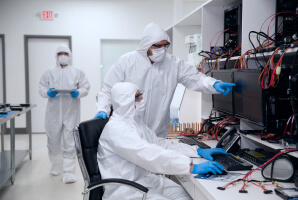
The inside of a hard drive is extremely sensitive, and even a small amount of dust or debris can cause permanent damage to the platter surface. That's why any physical repair involving platter damage must be performed in a certified cleanroom
A cleanroom filters contaminants out of the air, creating a controlled environment safe enough to open a drive without risking further harm. Our Class 10 ISO 4 cleanroom exceeds typical industry standards by a factor of ten, allowing fewer than 10 particles per cubic foot and fewer than three particles larger than 5 micrometers per cubic meter. For comparison, a standard Class 100 ISO 5 cleanroom allows up to 100 particles per cubic foot.
Given how compact and sensitive modern hard drives are, we believe this level of precision isn't optional, especially when platter damage is involved.
How We Recover Data From Damaged Platters
Once inside the cleanroom, our engineers begin by inspecting the platter surface under high-powered microscopes to assess the full extent of the damage. From there, they build a tailored recovery plan that accounts for any related failures, such as a damaged head or faulty PCB, before attempting to access the data itself.
That assessment shapes the imaging process. Engineers identify which sectors to prioritize and how to safely work around damaged regions of the platter. Using forensic-grade imaging hardware, we create a bit-by-bit clone of the drive, protecting the original platters from further damage during the recovery attempt.
Then, our specialists apply advanced recovery techniques to extract as much usable data as possible from the cloned image.
When Platter Damage Makes Data Recovery Impossible
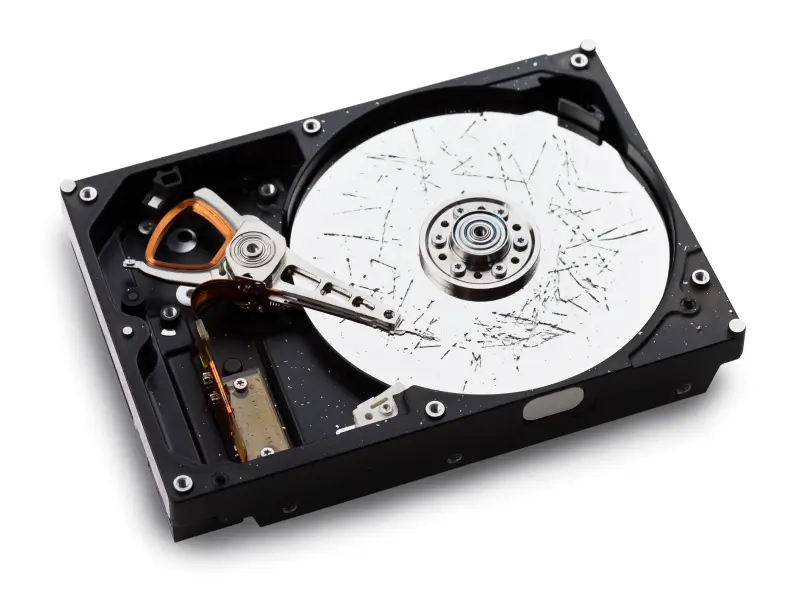
In some cases, platter damage is simply too severe to overcome.
If the magnetic surface of the platter has been completely scraped away, the data that lived there is gone permanently, no tool, technique, or level of expertise can restore information from a surface that no longer physically exists.
This is most common in cases involving deep scoring across the platter or repeated head crashes from continued use after the initial failure. It's exactly why powering down the drive the moment you notice signs of platter damage is so important, every additional second of use increases the risk of permanent loss.
Contact an Expert for Help with Platter Damage
If your hard drive has platter damage, the safest move is to stop using it and contact a certified data recovery service before attempting any fixes on your own. We recover data from desktops, laptops, and external hard drives affected by platter damage, with a 96% success rate since 2007.
Every case starts with a free diagnostic and a detailed report outlining what's possible before any work begins. If you decide to move forward, we back it with our No Data, No Recovery Fee guarantee, you pay nothing for the attempt.
Call 800-388-1266 or request a free quote online to get started today.
Common Questions About Platter Damage
What causes platter damage?
The most common cause of platter damage is a head crash. It occurs when a read/write head comes into contact with a spinning platter. This impact can carve a concentric groove into the platter surface and scatter magnetic debris across the disk. Accidental drops and mishandling are the most likely culprits of a head crash.
Other failures, such as a seized motor or sudden loss of power, can cause read/write heads to damage platters as well.
What are the signs that a hard drive’s platters are damaged?
Here are alarming signs of platter damage in a hard drive:
- Hard drive clicking while running
- Hard drive beeping on spin-up
- HDD not recognized by the system
- Frequent errors when accessing data
Platter damage can worsen fast. Stop using the hard drive once you notice these signs. Taking quick action could prevent the loss of important data.
Can you recover data from a hard drive with damaged platters?
In many cases. Engineers can retrieve data from hard drives with platter damage by repairing other failures and reading undamaged parts of the disk. The success of these efforts depends on the unique details of each case. Extensive platter damage often results in permanent data loss.
Our experts are also familiar with all types of hard drives. This knowledge even extends to less common models, such as helium drives and disks with multi-actuator technology.
No matter the hard drive, we can typically help.
Will platter damage get worse if I keep using my hard drive?
Yes. Platter damage accumulates in a matter of seconds. It is vital to power down the device immediately to safeguard the data stored on the disk. Even a few minutes running a broken hard drive can lead to irreversible data loss.

Timothy Burlee

Timothy Burlee is a content writer for Secure Data Recovery Services. He specializes in various topics in the data industry, including data recovery technology, storage devices, and digital forensics. Throughout his career, he has covered complex concepts and provided accessible solutions for users. Before joining Secure Data, he worked as a freelance technical writer.





.png)
