


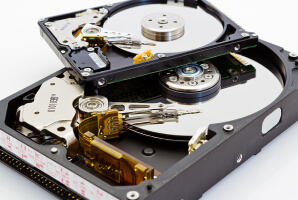
The hard drive’s spindle motor sits inside a central hub and rotates the magnetic platters at a constant speed. The consistency allows read/write heads to record data to the disk and retrieve files from the spinning platters.
When the spindle motor fails, the platters stop rotating. Therefore, stored data becomes stranded on the hard disk drive (HDD). Spindle motor failure often presents as a hard drive that powers on but won’t spin. A soft hum without rotation is also possible.
In most cases, specialists can recover data because the platters remain intact. However, spindle motor recovery typically involves transplanting the platter assembly into a compatible donor base in a certified ISO cleanroom.
What To Know:
- Spindle motor failure typically does not mean your data is lost forever.
- A skilled engineer can perform spindle motor replacement or a platter transplant to a donor drive.
- Attempting to power a seizing spindle motor to rotate the platters could cause severe damage and data loss.
- You can always request help from a data recovery expert to diagnose your device.
What Does a Spindle Motor Do?
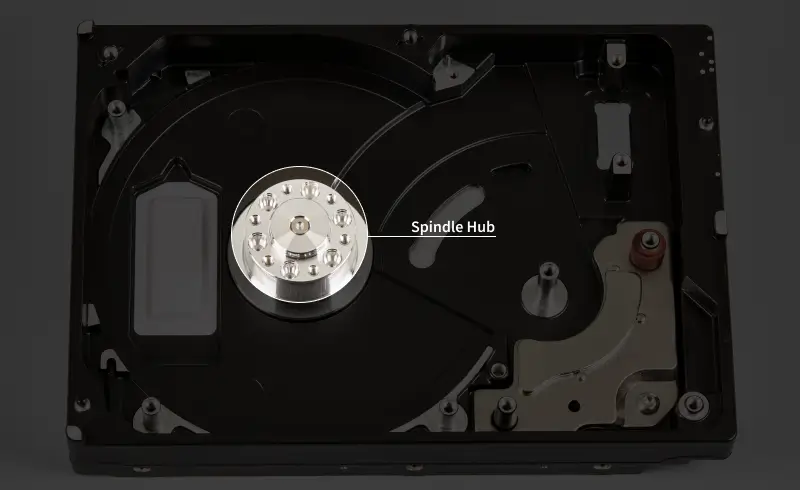
Spindle motors consistently rotate the stack of platters inside a hard drive.
A disk’s spindle motor consists of two parts. The stator is a stationary array of electromagnets with copper wire coils wound around a steel core. The rotor is a ring of permanent magnets attached to the inner wall of the spindle hub.
The current sent through the stator by the printed circuit board (PCB) creates a small magnetic field. The field produces torque on the permanent magnets in the rotor. This interaction forces the hub to rotate on a fluid dynamic bearing fixed to the shaft. As a result, the platters spin at an exact speed, depending on the model. Most hard drives reach 5,400 or 7,200 revolutions per minute (RPM). Some enterprise drives can achieve 10,000 or 15,000 RPM.
Without a working spindle motor, the hard drive is effectively dead.
Common Causes of Spindle Motor Failure
Spindle motor failure can happen due to worn bearings, electrical problems, or a catastrophic event, such as an accidental drop. It is essential to understand the specific failure type, as it informs the hard drive repair process.
The following issues can cause a spindle motor to fail:
Wear and Tear
A spindle motor is a mechanical component that must withstand sustained workloads. The motor spins platters thousands of times per minute. Hard drives often operate for hours and last for years. Heavy use gradually degrades the bearings that support the motor’s shaft. The film of lubricant starts to thin and lose its effectiveness. In addition, friction from continuous rolling and sliding creates small pits on the bearing.
This wear alters the spindle motor’s fine tolerances and hinders its function. It could begin to rotate at inconsistent speeds or vibrate. Both of these symptoms jeopardize the delicate platter surface and read/write heads. Given enough time, the disk struggles to spin smoothly, or the motor will seize completely.
Electrical Damage
Spindle motors do not rotate platters independently. They rely on a motor controller on the printed circuit board (PCB) to deliver direct current (DC) through conductive coils. This circuitry also regulates the voltage supplied to the spindle motor.
An unstable power supply can damage sensitive electronics on the PCB. A power surge could burn passive components or melt circuits that control the spindle motor. In these cases, the drive’s platters will not spin, even though the failure is upstream from the motor.
Physical Impact and Defects
As mentioned, hard drives are built and run with microscopic precision. Even little bumps can compromise the spindle motor. Dropping an external hard drive or knocking a desktop with an internal disk can deform the motor bearing and shaft. Sudden impacts could shift the platters sitting on the spindle hub.
Any of these events may result in the unexpected failure of the spindle motor.
Stiction
Stiction is the term for static friction within a hard drive. Stiction occurs when read/write heads stick to the magnetic platters during a period of rest. The flatness of the read/write heads can form a strong adhesive bond upon coming into contact with the disk’s overcoat.
Spindle motors are three-phase brushless DC (BLDC) motors designed to overcome the low inertia of platters. They are not meant to generate a force capable of breaking apart two surfaces bonded at a molecular level.
Stiction is frequently misdiagnosed as spindle motor failure because it presents similar symptoms. However, if the mechanical components are still functional, then more straightforward fixes could be an option.
How Failed Spindle Motors Affect Hard Drives
Hard drive failure rarely happens in isolation. The condition of the spindle motor often affects the drive’s platters and read/write heads. Electrical failures can prevent the motor coils from becoming energized and the disk from spinning up. Addressing other effects is critical to achieving a successful outcome when faced with a broken motor.
Here is how hard drive failures can cascade throughout the device without quick intervention:
How Spindle Motors Damage Platters
Platter damage is the most severe consequence of a failed spindle motor. When a motor malfunctions, the HDD’s rotational speed starts to fluctuate slightly. If the platters decelerate in use, the air cushion that maintains the exact flying height for the read/write heads disappears.
A collision between the slider and the platter surface is known as a head crash. Any contact with the magnetic platters can damage them and permanently destroy data. A locked spindle motor may cause platter scoring due to straining during a power-on cycle. Each abortive attempt increases the likelihood of platter damage.
How Spindle Motors Stress Read/Write Heads
Even if the hard drive avoids platter damage, a failing spindle motor poses a risk to the device. It could cause the drive’s head gimbal assembly (HGA) to wear out. Uneven platter rotation or hard drive vibration can force the read/write heads to make constant lateral adjustments. These nanoscopic corrections help the head remain centered on a specific track. Still, the movements slowly degrade the slider and suspension.
How Spindle Motors Fail From PCB or Firmware Damage
Not all spindle motor failures start in the stator or rotor assembly. Damage to the printed circuit board or firmware could keep the hard drive from spinning up. These components power and control the spindle motor. Without them, the motor might appear broken, even though the parts are still functional.
Why Spindle Motor Repair Requires Experts
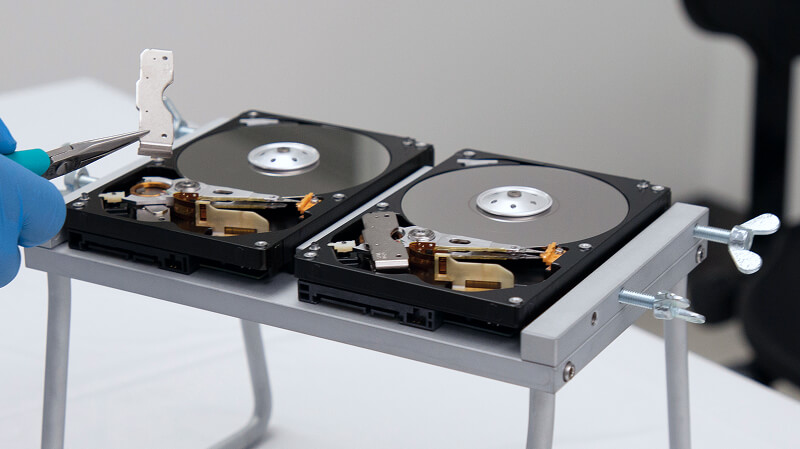
Spindle motor failure is one of the most challenging data loss scenarios in hard drive recovery. Whether the case calls for a motor replacement or platter transplant, the repairs demand precision tools and advanced techniques. Modern hard drives have tight tolerances measured in nanometers. A harmful particle or slight misalignment could lead to permanent data loss.
A professional data recovery service has the expertise and specialized equipment to resolve spindle motor failure on the first attempt.
Certified Cleanrooms for Invasive Repairs
Procedures that require engineers to open the hard drive need a certified cleanroom. As mentioned, the ultra-compact design of disks makes them vulnerable to dust, debris, and extreme conditions.
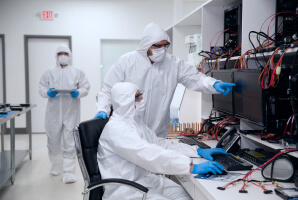
Our labs have Class 10 ISO 4 cleanrooms to protect the hard drive from further damage during repairs. The controlled environment filters harmful particles and maintains an ideal atmosphere. A state-of-the-art cleanroom must undergo routine audits to ensure it meets strict standards.
Sourcing Donor Hard Drives
Finding the most compatible donor drive is one of the most critical aspects of a case. For spindle motor replacement, the donor must match the patient drive’s parameters. The rotational speed, bearing type, spindle shaft, and mounting need to be identical for a disk to work. A full transplant requires matching platter diameters, spindle hub dimensions, and head positioning. The firmware revision and production date also factor into the search for a donor drive.
We have a large library of HDD models to source donor parts without delay and reduce downtime from data loss events.
Risk of Unsuccessful Repair Attempts
A successful first attempt is crucial. Failed repairs often inflict more damage to the drive’s moving parts and complicate data recovery efforts. Spindle motor failure can quickly become a hard drive with scratched platters and torn read/write heads. Each unsuccessful attempt lowers the odds of restoring lost data.
Avoid repeatedly powering on the hard drive, and contact an expert if you suspect the disk may have physical damage. We offer free diagnostics, no-obligation quotes, and a No Data, No Recovery Fee guarantee. So you can make the best possible decision with all of the relevant details.
How We Recover Data From Hard Drives With Failed Spindle Motors
There are two paths to deal with a broken spindle motor.
Spindle motor replacements remove the original assembly from the hard drive and install a donor in the same base. This approach allows the platters to remain on the spindle throughout the procedure. It also preserves the relationship between the drive’s heads and platters. A spindle motor replacement is the least invasive method, but it is dependent on finding a suitable donor.
Platter transplants remove the platters from the failed drive and place them in a donor chassis with the same properties. Platter swaps are a higher-risk repair, but they are the only data recovery option in some instances. A model’s design might not lend itself to a motor replacement. The spindle hub itself may have encountered damage.
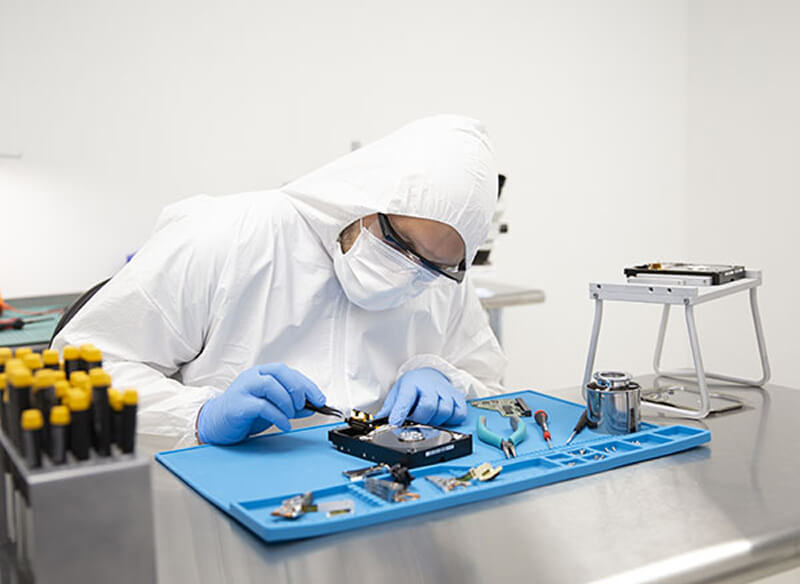
A reliable data recovery service can assess your hard drive, determine the right approach, and handle the necessary repairs. The steps below describe our proven process.
Step 1: Diagnose Spindle Motor Failure
Before work begins, our engineers examine the hard drive in a Class 10 ISO 4 cleanroom. They inspect the disk to pinpoint the root cause of the data loss. A failed spindle motor could stem from a defective PCB or corrupted firmware. An expert must address all issues to recover data from the hard drive.
Step 2: Evaluate Platters and Read/Write Heads
We also analyze the platters and the read/write heads during the diagnostic phase. A spindle motor that does not produce consistent rotation can cause read/write heads to scratch the platter surface. Technicians must consider how their condition will affect the recovery process.
Step 3: Determine Best Path
Our experts carefully develop a plan that accounts for the unique details of your case. If the assembly appears intact, they restore motor function by repairing the PCB or correcting firmware corruption. In cases involving stiction, they use purpose-built tools to unstick heads from the magnetic platters. When components fail, they establish whether a spindle motor replacement is possible. A platter transplant is an option for disks when a less invasive approach is not available.
Step 4: Find Donor Drive
We identify a donor hard drive based on your device. It needs to have the same motor properties, platter dimensions, and firmware revision as the patient drive. For platter transplants, a donor drive must also have compatible read/write heads and mapping. A close match is not enough in hard drive repair. Many times, success depends on finding the ideal donor drive.
Step 5: Perform Spindle Motor Replacement or Platter Transplant
Skilled engineers complete spindle motor replacements, platter transplants, or other repairs in a Class 10 ISO 4 cleanroom. They use specialized tools and techniques to resolve spindle motor failures. This equipment ranges from tools to loosen a jammed motor to kits that keep platters synchronized during a swap. Even a minor mistake could cause platters to come into contact, leading to permanent data loss.
Step 6: Confirm HDD Function
Technicians adjust the spindle motor balance and platter alignment. After making those adjustments, they verify that the hard drive will run smoothly before spinning it up. A cautious approach to powering on an HDD can prevent platter damage.
Step 7: Create Bit-By-Bit Image
To preserve the original data, we create a bit-by-bit copy of the repaired drive. Having a disk image allows us to make multiple attempts without damaging the hard drive and restore as much data as possible.
Step 8: Recover Your Data
We restore data stored on the dead hard drive. Once finished, our team transfers the recovered files to an encrypted external drive or secure server. You owe nothing if we are unable to recover the lost data.
Professional Spindle Motor Repair
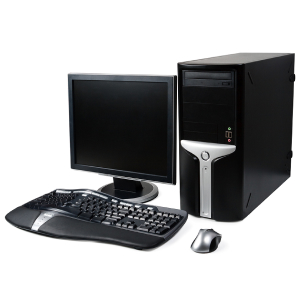
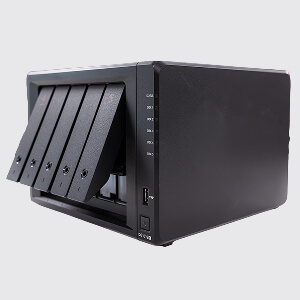
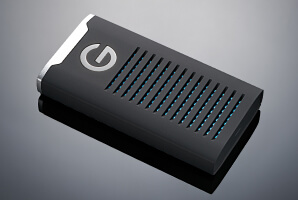
Secure Data Recovery has offered desktop and external drive recovery for disks with motor issues since 2007. Our engineers even provide RAID data recovery for drive members with a seized motor.
Spindle motor failure is one of the most complex cases in hard drive recovery. Professionals are uniquely equipped to deliver the best outcomes for modern hard drives. Our engineers have decades of experience and maintain a 96% success rate across all failure types. Standard service features free diagnostics and a No Data, No Recovery Fee guarantee.
Call 800-388-1266 or fill out our online form to get a free quote and reclaim what matters most.
Frequently Asked Questions About Spindle Motor Failure
What are signs of spindle motor failure for hard drives?
Here are the most common signs of spindle motor failure:
- Disk does not spin up despite receiving power
- Hard drive not detected by system
- Platters rotate intermittently
- Soft whirring sound
Do not attempt to diagnose the issue if the hard drive contains important data. Spindle motor repair requires advanced tools and a certified cleanroom for intervention.
Is my data still intact if my hard drive’s spindle motor failed?
In most cases. The spindle motor rotates the platters. The greatest risk is a head crash caused by inconsistent rotational speed or repeated power-on attempts. If you suspect a failing spindle motor, shut down the hard drive immediately to protect your data.
Can you repair a hard drive’s spindle motor?
Not in the usual sense. The compactness and precision of a spindle motor make it impractical to repair components. However, we can replace a failed motor with an identical assembly from a donor drive to restore function. Sometimes, our engineers may need to transfer platters to a different chassis. Both methods can recover data from a hard drive that stopped working due to a broken spindle motor.
What is stiction?
Stiction occurs when read/write heads form an adhesive bond to the magnetic platter. Spindle motors are designed to overcome a platter’s low level of inertia. They do not generate enough force to separate the read/write head from the platter surface. As a result, the hard drive will not spin in this state. Detaching the stuck head from the disk often enables the spindle motor to work again.
How long does spindle motor repair take?
It depends. Cases where the read/write heads are stuck to the platter surface are straightforward. A spindle motor replacement will take longer to complete. Platter transplants are among the most complex and time-consuming procedures in data recovery.
For that reason, we offer our customers free diagnostics and flexible service options. That way, they can choose a plan that fits their budget and timeline.

Timothy Burlee

Timothy Burlee is a content writer for Secure Data Recovery Services. He specializes in various topics in the data industry, including data recovery technology, storage devices, and digital forensics. Throughout his career, he has covered complex concepts and provided accessible solutions for users. Before joining Secure Data, he worked as a freelance technical writer.





.png)
