


Pinpointing the cause of data loss and then restoring lost files is often a complex process. That is especially true for modern storage devices.
One of the more recent trends in removable media involves monolithic flash memory. The technology integrates all necessary components into a single module. It is a departure from NAND flash storage devices that spread memory cells and the controller across multiple, connected dies.
While a monolith pinout offers a few benefits, it also comes with trade-offs.
This guide explains how monolithic flash memory works. In addition, it provides insights into monolithic flash drive recovery and monolithic SD card recovery from our experts.
What Is Monolithic Flash Memory?
Monolithic flash memory refers to a chip that contains all memory cells and control circuitry on a single piece of silicon.
The simplified layout differs from most NAND flash storage. Most devices, such as solid-state drives (SSDs) and smartphones, have several smaller dies packaged together on a printed circuit board (PCB). Fabricating a single die to hold all storage and logic components makes sense for compact storage devices with lower capacities.
As a result, USB flash drives and memory cards commonly use monolithic flash memory. Monolith pinouts also have fewer failure points and reduce production costs for data storage companies.
However, they pose a unique challenge for data recovery.
Monolithic Flash Drive Recovery Using X-Rays
Monolithic flash drive recovery requires specialized tools and techniques. The process of retrieving data from memory cells on single-die silicon demands a different approach.
The earlier image is a 32 GB SanDisk USB flash drive with a triple-level cell (TLC) architecture and a monolithic pinout. As mentioned, that means SanDisk packaged the memory cells and the controller onto the same chip for simplicity.
When hardware fails, the challenge becomes identifying the device’s pinout and locating traces within the monolith.
Unlike most flash storage, a monolithic device does not expose NAND pins to the technician. You cannot desolder memory cells from the chip and use custom hardware to read them.
Determining the pinout enables the engineer to bypass a dead controller. This failure is a common cause of data loss on flash drives. With the proper pinout, a connected reader can interact with memory, extract raw data, and rebuild the file system.
At Secure Data Recovery, we identify monolith pinouts with cutting-edge X-ray technology.
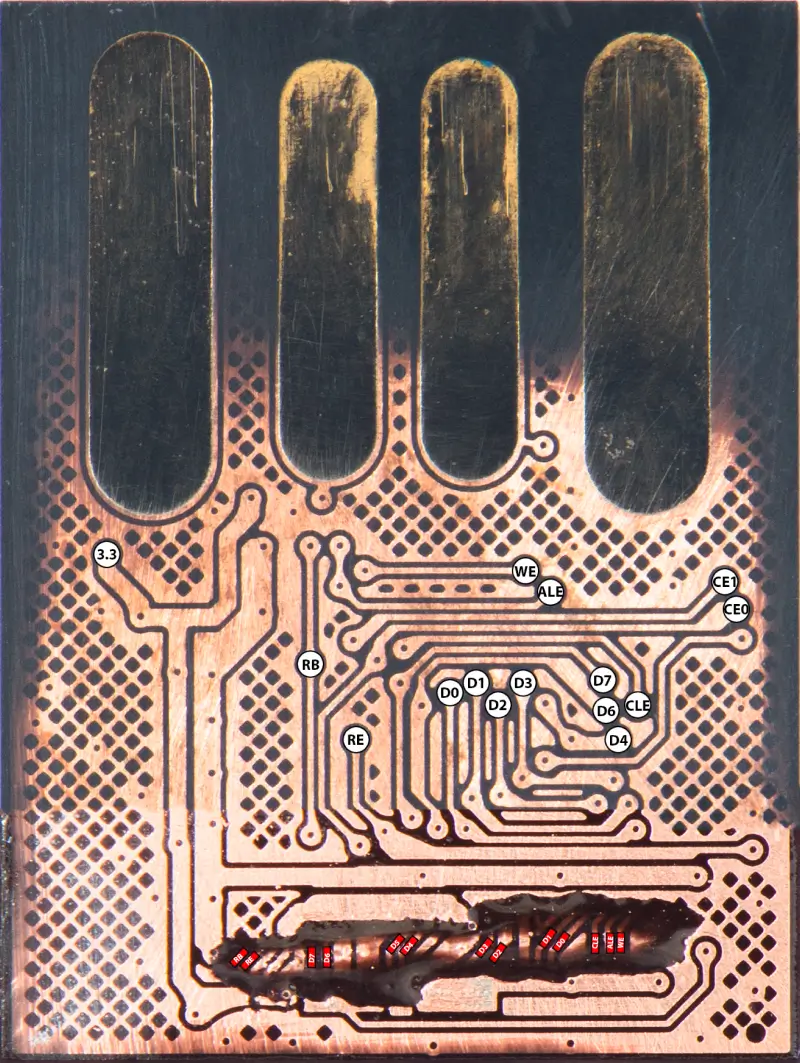
The image above shows the same USB flash drive after analyzing and labeling the pinout. Knowing the specific pads, data lines, control signals, and block sizes helps dump the device’s contents and then reconstruct lost files. Layouts and logical organization often vary by thumb drive.
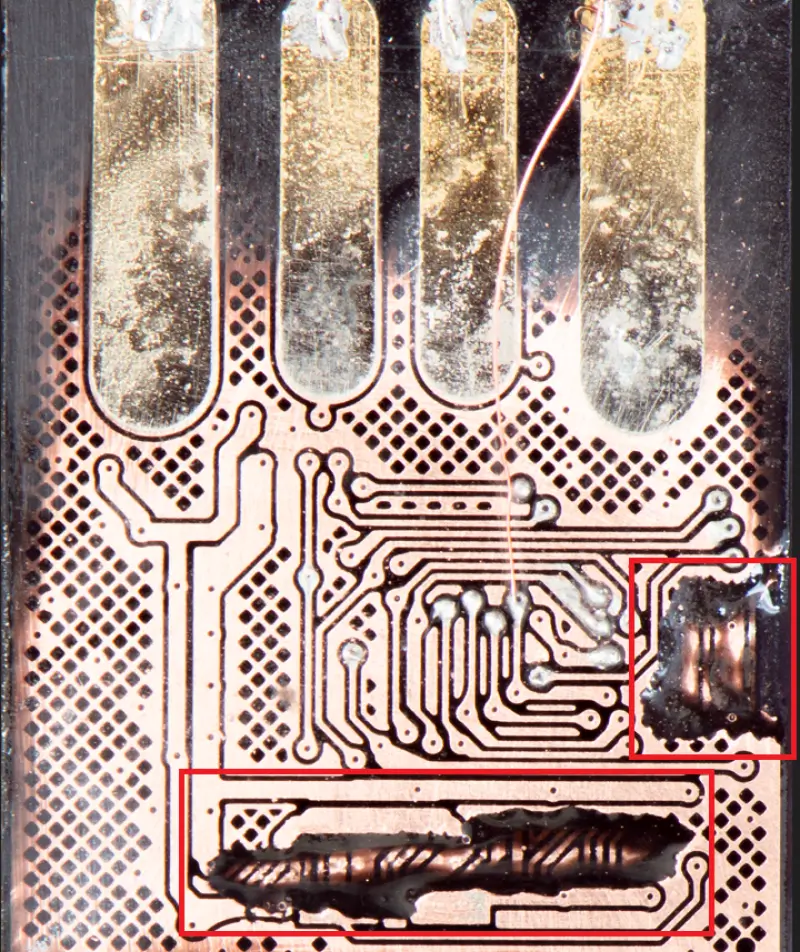
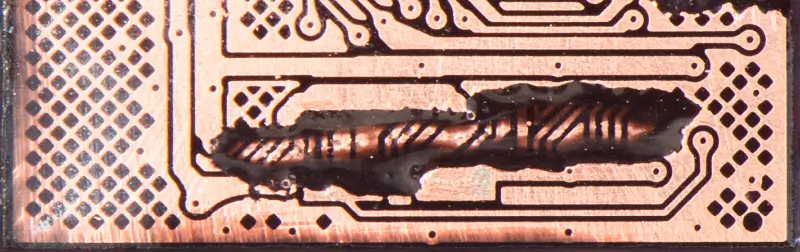
Locating traces buried deep within the monolith is another benefit of X-ray imaging. It allows us to find the best points for data recovery and diagnose any damage that needs repaired.
These capabilities could be the difference between a full recovery and total data loss.
All services are available for monolithic flash memory for a small fee.
Is Monolithic SD Card Recovery Possible?
Yes. We also know how to fix a damaged SD card with advanced tools and X-ray imaging. A monolith pinout on modern memory cards does not prevent us from restoring data.
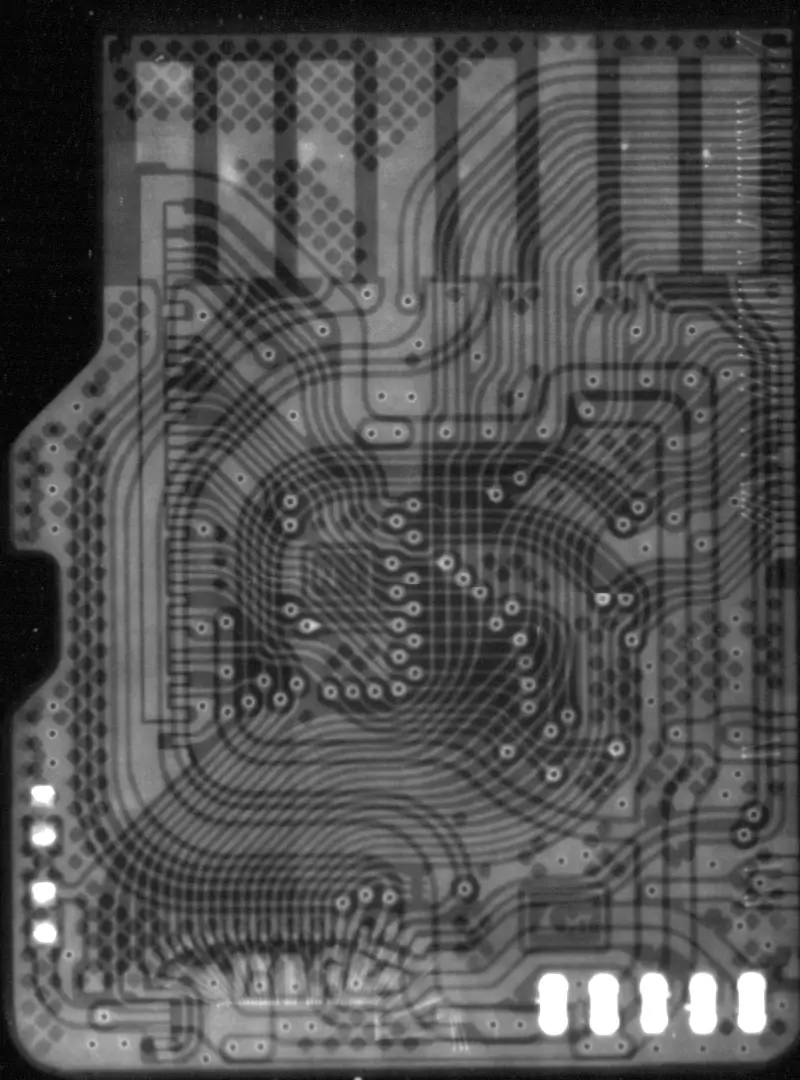
This image reveals the pads and paths on the silicon die of a microSD card. After mapping the pinout, our engineers can provide SD card recovery.
While a monolithic flash device complicates the data recovery process, it does not make it impossible.
Contact the Experts for Monolithic Flash Data Recovery
Our certified engineers have the experience, expertise, and equipment to recover data from USB flash drives and SD cards with monolithic flash memory.
We offer data recovery services regardless of storage type, device manufacturer, failure mode, or file system. Standard service includes a free diagnostic, free quotes, and a No Data, No Recovery Fee guarantee. You get your data back, or pay nothing. It is that easy.
Call 800-388-1266, request help, or find a location to learn more about recovering data from monolithic flash memory.

Timothy Burlee

Timothy Burlee is a content writer for Secure Data Recovery Services. He specializes in various topics in the data industry, including data recovery technology, storage devices, and digital forensics. Throughout his career, he has covered complex concepts and provided accessible solutions for users. Before joining Secure Data, he worked as a freelance technical writer.





.png)
