Data Recovery Cost Variables Explained
Search the internet for data recovery pricing, and you will find costs ranging from hundreds to thousands of dollars. The truth is that no one can determine the cost without considering all of the variables involved.
For example, let’s assume we have two identical drives with data loss. However, one device was sitting at the bottom of the ocean for a week, and the other wasn't. The process to recover data from each device will be very different. The device with corrosion will be much more difficult, time-consuming, and need particular expertise.
In the absence of specific details for your case, prices are simply guesses. These estimates say very little about how much you will spend to restore your data to a usable condition.
Flat and per-gigabyte rates are the least effective measures for achieving fair, honest pricing. The volume of data makes no difference in the scenario above, so the cost should not change.
Below, we list a few of the variables that impact pricing:
Time Investment
Data recovery engineers spend years gaining the technical expertise and experience required to achieve the best outcomes. The more experienced they are, the better their results. Professional services can cost $100 to $300 per hour, depending on the difficulty associated with the process.
Our experts hold the most credentials in the industry, allowing us to achieve a 96% success rate. If, for any reason, we can’t successfully recover your data, you pay nothing. It’s that simple. No recovery? No fee.
Advanced Facilities and Tools
Our technicians use a wide range of tools and specialized equipment for both non-invasive and invasive data recovery. These might include software utilities for locating and extracting lost data or specialized hardware, such as head combs or drive spindle replacement tools.
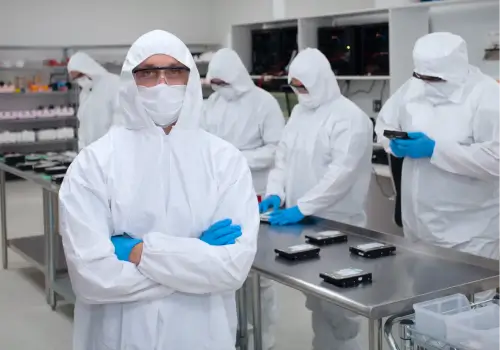
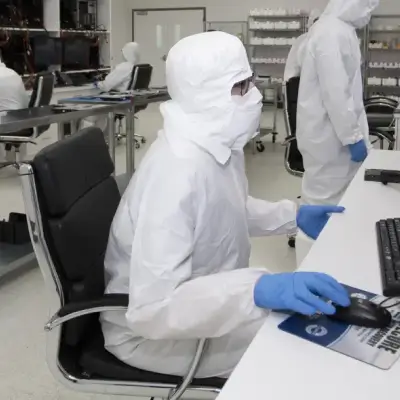
Complex cases often demand proprietary, forensic-grade tools that allow manual access and retrieval. These projects require certified Class 10 ISO 4 cleanrooms, soldering stations, and specialized software and hardware. That is a sign of a service that can achieve the best results and fastest turnarounds.
Audited labs cost hundreds of thousands of dollars to build and maintain. Our state-of-the-art facilities can resolve any data loss scenario, regardless of device or failure.
Library of Donor Parts
When it comes to providing quick turnarounds, immediate access to storage device parts is vital. You must match each component using several identifiers. These range from the manufacturer and model to the specific firmware or the date of manufacturing. Data recovery companies collect and classify hundreds of replacement parts for various storage devices, including hard drives, solid-state drives (SSDs), phones, and others.
Moreover, we must repair any failed device to a functional state to enable file-level recovery. For this reason, having access to a library of components is essential. These components include read/write heads, controllers, microchips, and much more. Our ability to provide our customers with the highest success rates in the industry relies on this huge collection.
We maintain partnerships with major device manufacturers. These partnerships give us the inside edge for complex data loss scenarios without threatening existing product warranties. They also allow us to keep pace with rapid progress, allowing us to respond to current and emerging data loss threats.
Audited Infrastructure
Providers must have commercial space and the necessary physical and cybersecurity mechanisms to handle customer data safely. Physical security includes in-person monitoring, alarm systems, and interior/exterior surveillance.
Security is at the heart of data recovery services. In addition to all physical security precautions, our labs undergo regular third-party audits to ensure that all data handling procedures are certified.
Secure Data Recovery Services undergoes voluntary third-party SSAE 18 SOC 2 and 3 audits to verify the effectiveness of over 80 cybersecurity protocols. We routinely help customers recover highly sensitive and confidential information, keeping that data safe at every stage.
The infrastructure controls we employ have a high cost. However, they are essential to providing our customers with the confidence that their data is kept secure and confidential throughout the process.
Research and Development
Creating new tools and utilities is important for keeping up with existing failures and the evolution of storage technologies. Manufacturers are constantly discovering more effective ways to store data. At the same time, data recovery firms face the challenge of adopting new solutions to the increasingly complex ways data can become corrupted or lost. For this reason, we invest heavily in R&D.
Data recovery is not always possible with available tools. Every data loss case is unique. Often, the techniques required to resolve specific data loss scenarios don't exist, so new techniques need to be created. We have dedicated research and development teams for every media type. We are able to help where others fall short.













.png)

