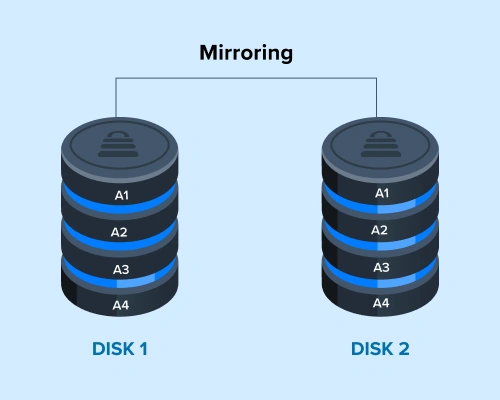
In many ways, RAID 1 is the most basic form of true RAID. RAID 1 systems use mirroring, which means that each drive in the array is exactly the same. When the array writes data, it writes identical data to each hard disk drive. Most simple RAID 1 arrays have two drives, although some systems have additional drives for additional fault protection. Businesses often mirror RAID 0 or RAID 5 arrays with a RAID 1, creating an identical copy of the primary array to add additional redundancy.
RAID 1 offers several advantages over other popular RAID configurations such as RAID 5 and RAID 0. It is an extremely dependable option, as the system will not lose data as long as one drive is functional. However, RAID 1 does not offer performance improvements over a standard hard drive and may actually offer slower performance without the implementation of multiple RAID controllers. Because of this, RAID 1 is typically used when high fault tolerance is more important than performance. However, while RAID 1 provides significant protection, no RAID configuration perfectly prevents data loss.
Common RAID 1 failure scenarios include:
- Accidental File Deletion or Formatting
- Faulty RAID Controller
- Errors During RAID Rebuild
- Hardware Conflicts
- Software Errors Causing File Damage or Corruption
- Corrupt RAID Array Configuration
- Multiple Hard Drive Failures
- Electronic Damage
- Operating System Failures
Because RAID 1 failures are relatively uncommon, you need to work with an experienced data recovery company to successfully retrieve your data. Secure Data Recovery Services offers dedicated, professional repair and recovery services for all types of RAID systems including RAID 1.












.png)
