Information Sharing & Security Issues
Thanks to modern technology, computing devices come in many different forms, such as desktop machines, laptops, smartphones, music players, and tablets. Any one of these devices may connect with other computing devices and share information, and in many cases, they may also connect with banks to conduct financial transactions. All of these machines are potentially vulnerable to misuse by unauthorized users, and therefore, users should always protect them with passwords.
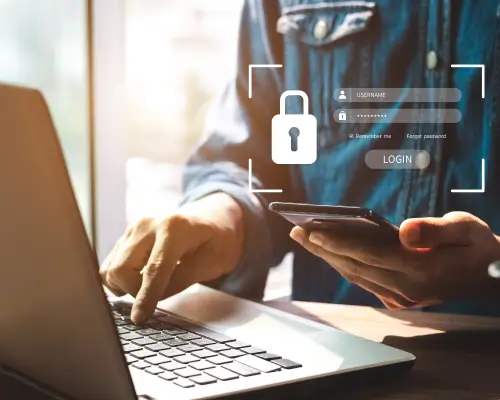
Passwords are a means by which a user proves that they are authorized to use a computing device. A single device may have multiple users, each with their own password. Passwords are not unlike a lock-and-key system, in which only the right key will enable a person to have access. The difference is that each person has a different key for the same door.
Some computing devices, such as desktop computers and laptops, also have a management-level user, or "superuser," who has the ability to control other users and modify the computing devices software, among other things. This superuser account is also known as the "root" or "administrator" account. This is important to know because while hackers will try to acquire any password they can get, they will generally try to guess the superuser password first, as it gives them the most control over a device.





.png)
